Tel: +86 139 0589 5606
E-mail:info@globri.com

Tel: +86 139 0589 5606
E-mail:info@globri.com
There is a wide variety of luminous evacuation direction signs on the market, and products of different materials differ drastically in luminous duration and fire resistance rating. Whether they meet fire protection specifications hinges entirely on proper material selection for the project. Conventional ordinary luminous signs only glow for 10 to 30 minutes and are made of combustible materials, failing to reach the luminous duration required for fire emergency evacuation and thus falling short of current fire protection standards.
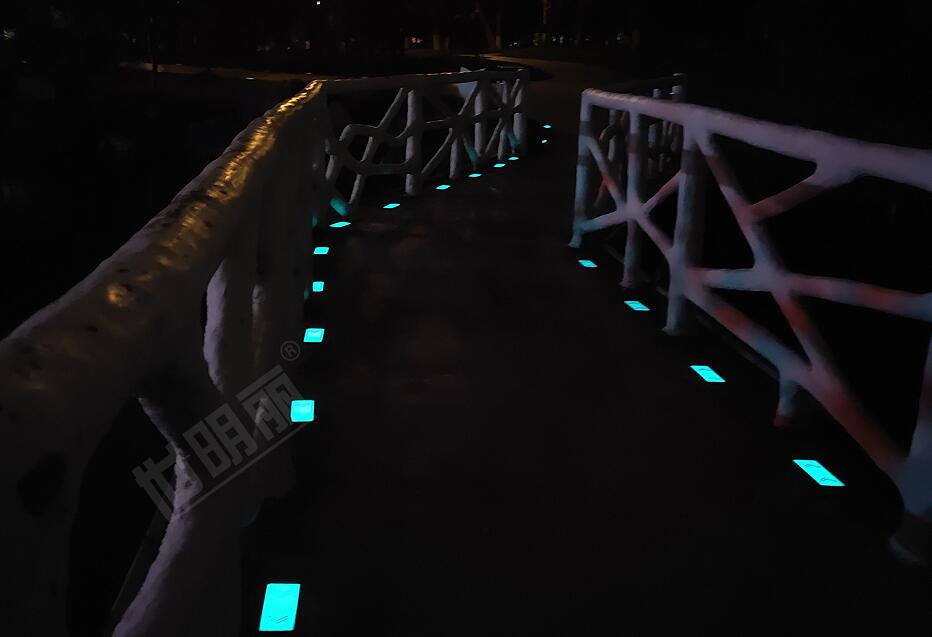
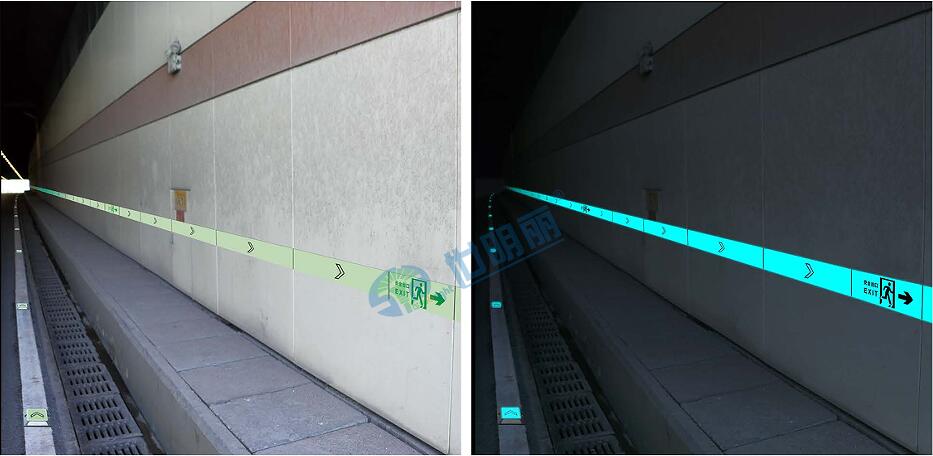
Globright self-luminous signs can sustain long-duration afterglow luminescence for more than 10 hours after a single light absorption cycle. They are available in two material grades: Class B1 flame-retardant material and Class A non-combustible material. Meeting the luminous time standard for fire evacuation, they not only guide crowds in emergency escape but also mark precise advance routes for fire search and rescue operations amid fire hazards.
The core function of evacuation guidance signs is to direct people to quickly withdraw from dangerous zones during fires and sudden emergencies, requiring stable round-the-clock directional performance. Three types are commonly adopted in engineering projects: mains-powered LED signs, conventional static non-luminous signs, and power-free self-luminous signs. Distinct materials lead to prominent gaps in practical performance and inherent drawbacks.
1. Pros & Cons of Power-Free Luminous Evacuation Direction Signs
Power-free luminous evacuation signs are split into two major categories: inorganic self-luminous signs and organic luminous signs. The organic series is further divided into signs made of organic resin self-luminous coils and ordinary organic luminous film signs.
A shared merit of all three types is no external power supply or extra energy consumption; they store energy from natural light and glow autonomously in dark environments.
Advantages
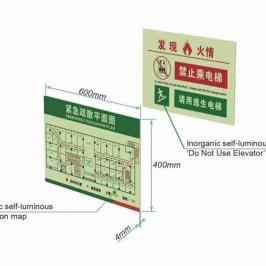
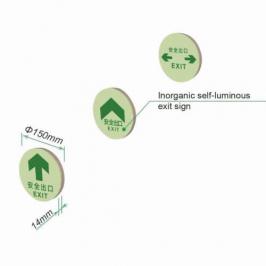
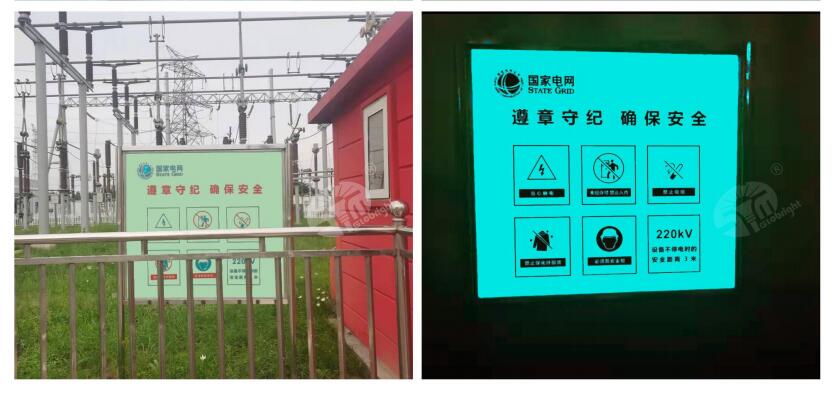
Inorganic self-luminous evacuation signs: Manufactured from Class A non-combustible inorganic stone material, they glow for over 10 hours after light charging. Featuring high hardness, excellent wear and corrosion resistance, and anti-aging properties, their graphics and text are integrally sintered onto the panel and never fade. Applicable for both indoor and outdoor scenarios, they boast an outdoor service life exceeding 15 years.
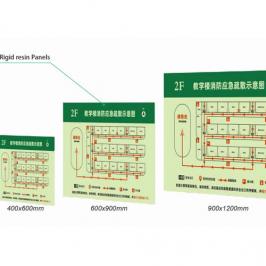
Organic resin self-luminous coil evacuation signs: Reaching Class B1 flame retardancy with an afterglow duration of more than 10 hours. The soft texture supports customized UV printing, and floor-specific variants are fitted with an extra wear-resistant protective layer.
Organic luminous film signs: Low cost and superior flexibility, also compatible with UV graphic printing.
Disadvantages
Organic luminous film evacuation signs only maintain luminescence for 10 to 60 minutes, are highly flammable, generate thick smoke and irritating odors when exposed to open flames, and are prone to aging and yellowing when installed outdoors.
Inorganic self-luminous evacuation signs have rigid texture that cannot be bent and do not support direct UV printing.
Organic resin self-luminous coil evacuation signs carry hidden risks of aging and yellowing under prolonged outdoor sunlight exposure.
2. Mains-Powered LED Evacuation Signs
Advantages: Powered by 220V municipal electricity or built-in batteries, they keep lighting normally for guidance day and night when electronic components function properly.
Drawbacks: Hidden faults in internal batteries are hard to detect during routine inspections; high temperatures during fires easily damage electronic parts. Continuous power consumption generates electricity fees, and later maintenance for circuits and batteries incurs high recurring costs.
3. Ordinary Non-Luminous Evacuation Signs
Fabricated from PVC, KT board, Foam PVC board, stainless steel, aluminum plate and other materials, they feature simple processing and low procurement cost. However, their overall cost performance is poor: graphics fade, panels age and metal parts rust after roughly two years of use. Most critically, they completely lose evacuation guidance functionality at night.
In light of product performance and fire protection codes, ordinary luminous film signs, traditional static signage and standard LED signs all have varying degrees of compliance defects and cannot satisfy emergency evacuation standards across all scenarios.
Globright’s Class A non-combustible inorganic self-luminous signs and Class B1 flame-retardant organic resin self-luminous coil signs deliver over 10 hours of stable autonomous luminescence, with all technical indicators conforming to fire protection requirements. They are applicable to indoor fire protection projects, public buildings, underground spaces and numerous other settings. When selecting fire safety signs for projects, choose the corresponding self-luminous product matched to the service environment to fundamentally cut later replacement and operation & maintenance expenses.