Tel: +86 139 0589 5606
E-mail:info@globri.com

Tel: +86 139 0589 5606
E-mail:info@globri.com
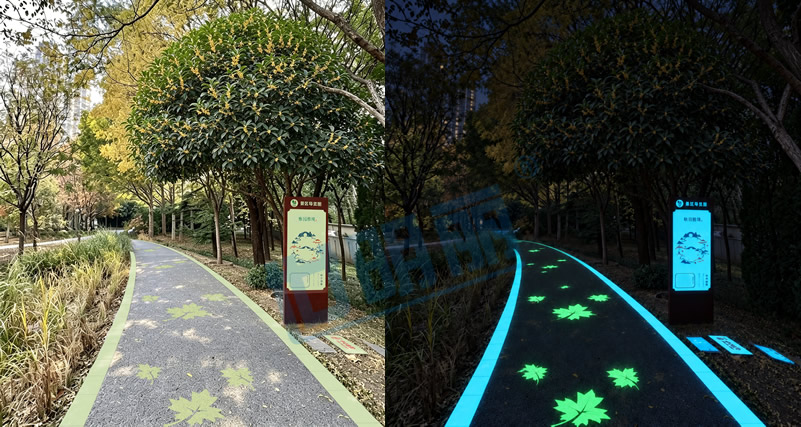
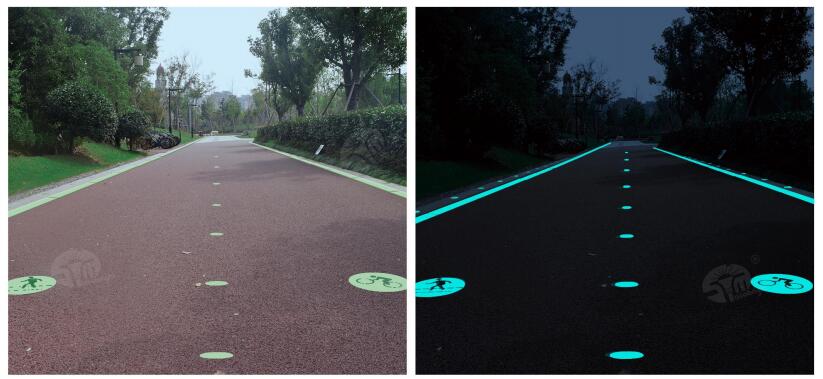
Driven by growing demand for outdoor road lighting projects, photoluminescent pavement has become a preferred design solution. Inorganic self-luminous materials stand as the top choice for pavement luminescence sources, capable of sustained autonomous glow for over 10 hours with an ultra-long service life. The luminous effect of photoluminescent pavement mainly originates from self-luminous materials laid on the road surface, commonly referred to as luminous gravel, glowing particles and self-luminous tiles.
However, inorganic and organic materials have essential intrinsic differences. Different self-luminous materials result in distinct service lifespans of photoluminescent pavement, while varying densities of glowing particles lead to inconsistent luminous performance. As a professional manufacturer of self-luminous materials, Globright analyzes the essential properties of pavement luminous materials, compares the pros and cons of various options, and provides professional reference schemes for material procurement in photoluminescent pavement engineering.
The luminescence of photoluminescent pavement relies entirely on surface self-luminous materials, which fall into two major categories: inorganic self-luminous paving tiles and self-luminous gravel. Self-luminous gravel is further divided into inorganic light-storing luminous gravel and organic resin luminous gravel. The two types differ fundamentally in material composition and luminous stability, serving as decisive factors determining how long the photoluminescent pavement can remain functional.
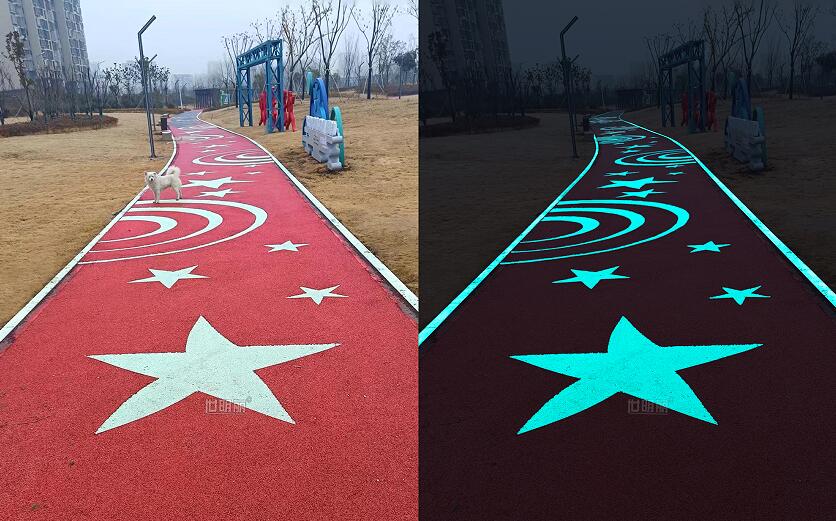
Pavement paved with this material features extended service life and highly stable luminous performance. Inorganic luminous gravel is stone aggregate sintered and fused from multiple inorganic minerals at temperatures above 1,000°C, with prominent properties including high hardness, wear resistance, anti-aging, anti-corrosion and resistance to prolonged water immersion.
During construction, inorganic luminous gravel is mixed and stirred with special stone adhesive before paving. The particles bond tightly with the original pavement aggregate and rarely detach, structurally guaranteeing long-term stable operation of the photoluminescent pavement.
After a single round of light absorption and energy storage, inorganic luminous gravel glows autonomously for more than 10 hours at night, following an infinite cyclic mechanism: Light Absorption → Energy Storage → Light Emission. Its luminous brightness and afterglow duration will not degrade with years of use. Combined with anti-detachment performance, anti-aging characteristics and a Mohs hardness of Grade 5, its overall service life can basically match that of the main pavement structure.
Pavement adopting this material generally has a short service cycle and unstable luminous output. Right after construction, organic gravel only glows for 2 to 3 hours per night. A series of defects will emerge after a period of operation.
Prolonged ultraviolet irradiation causes yellowing and aging of the particles; repeated compression and abrasion from pedestrians and vehicles lead to particle shedding, resulting in continuous deterioration of luminous effect. Under normal service conditions, the luminous function of such photoluminescent pavement will fail on a large scale within roughly 3 years, failing to meet long-term application requirements.
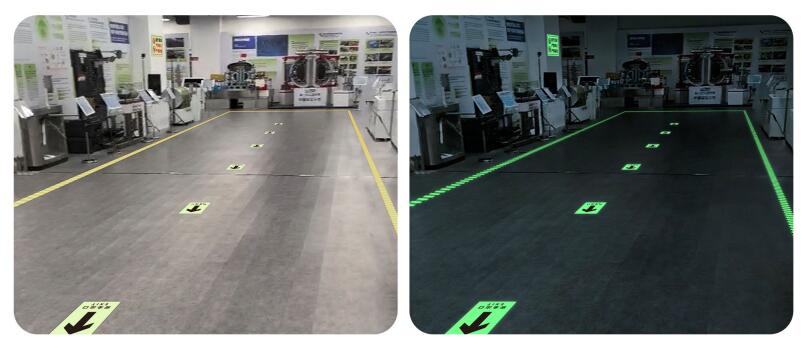
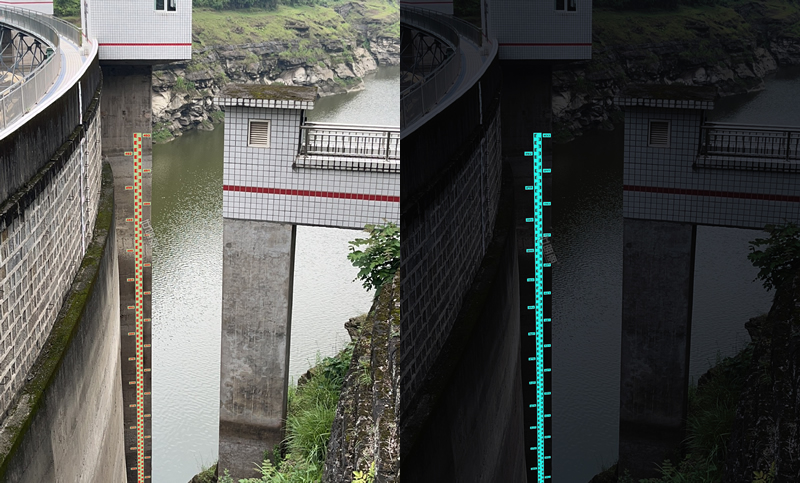
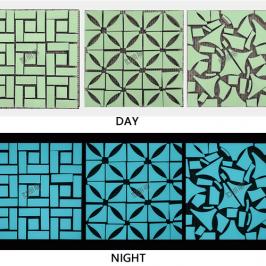
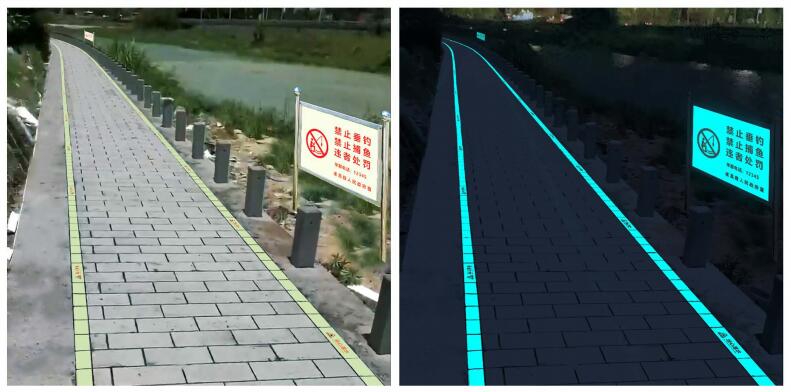
Manufactured via high-temperature sintering of multiple inorganic minerals, these stone tiles also deliver high hardness, wear resistance, anti-aging, anti-corrosion and water immersion resistance. Boasting flexible application scenarios, they can be used not only as pavement markings but also processed into vertical wall signs, directional boards and safety guidance indicators.
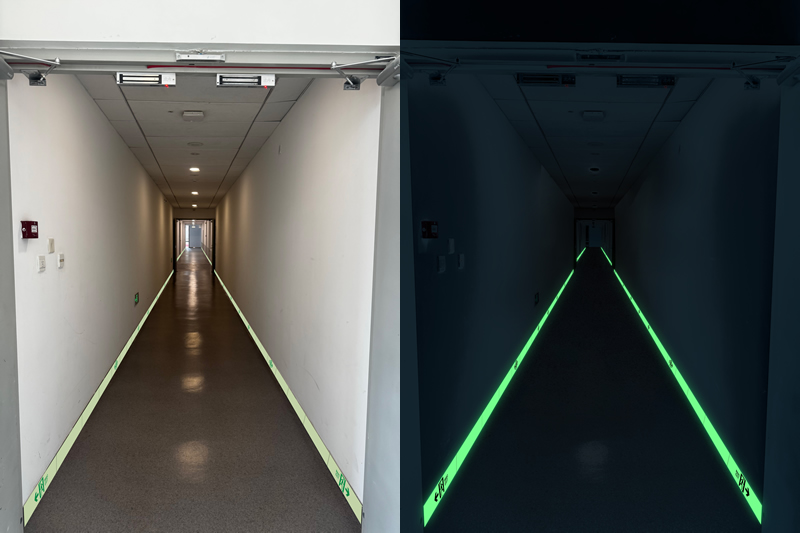
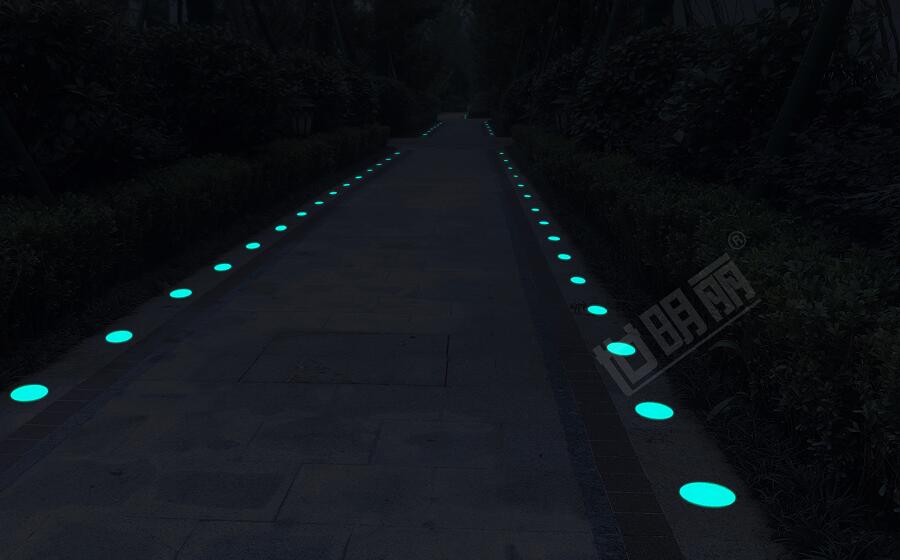
When laid along both edges of photoluminescent pavement, the tiles form continuous glowing lines after dark, clearly outlining pavement boundaries to remind pedestrians of walking zones and safeguard travel safety. They also operate on the endless cycle of light absorption, energy storage and luminescence. Barring man-made damage, their luminous performance remains unchanged throughout permanent service.
By comprehensive comparison of all self-luminous materials for photoluminescent pavement, inorganic light-storing luminous gravel and inorganic self-luminous paving tiles are ideal engineering choices, thanks to reliable material properties, stable long-duration luminescence and ultra-long service life. Restricted by inherent material drawbacks, organic resin luminous gravel only suits short-term, low-load simple projects due to short glow time and easy aging & peeling.
When planning and constructing photoluminescent pavement, engineering parties shall select materials rationally based on design service life, outdoor operating conditions and functional demands. This approach ensures effective night lighting and safety guidance, cuts follow-up renovation and maintenance expenses, and strikes a perfect balance between project quality and cost control.