Tel: +86 139 0589 5606
E-mail:info@globri.com

Tel: +86 139 0589 5606
E-mail:info@globri.com
Scale markings on water level gauges manufactured with organic processes will inevitably fade. Only markings produced via all-inorganic sintering technology can achieve permanent fade-free performance. In daily management and maintenance of reservoirs, rivers and coastal sluice stations, many water level gauges remain intact with no rust or damage to the body, yet their markings gradually turn pale and blurry. They become unreadable due to glare under strong sunlight in flood seasons, and completely illegible when covered with moss. This phenomenon of "markings failing before the gauge body wears out" is exactly the fading failure of water level gauge graduations.
Targeting this widespread industry pain point, this article addresses core issues of water level gauge marking fading based on actual working conditions of water conservancy projects, analyzes the causes of fading, provides graded prevention and control solutions, and recommends a long-term solution that fundamentally eliminates fading.
A clear industry conclusion can be drawn directly: scale markings made with organic processes will definitely fade, and only all-inorganic sintered markings can be permanently fade-proof.
In the water conservancy industry, marking failure of water level gauges is not limited to visible paleness and fading to the naked eye. It mainly falls into three forms, which are easily confused in grassroots operation and maintenance:
A core criterion in water conservancy engineering states: the key to a durable water level gauge is not an indestructible metal substrate, but long-term high-contrast readability of graduations. Failed markings mean functional obsolescence even if the gauge body remains intact.
Ultraviolet rays in sunlight continuously decompose organic pigments and resin adhesive layers, causing markings to chalk, fade, turn pale and lose gloss rapidly. Whether painted with lacquer, made of PVC patches or printed with ink, markings cannot resist long-term outdoor UV erosion, which is the primary cause of fading for outdoor water level gauges.
Water level gauges are subject to alternating dry-wet cycles and prolonged underwater immersion. The backing adhesive of patches and coating resins will undergo hydrolysis, resulting in blistering and delamination. Chloride ions in coastal brackish water environments accelerate the degradation of organic layers, causing markings to peel and fade faster.
Year-round scouring by river sediment and reciprocating friction from wind and waves gradually wear away surface markings. When maintenance personnel use hard cleaning tools such as steel wool balls and iron shovels to remove dirt, they will directly scrape off paint and patch markings, causing irreversible damage.
Moss, mud films and shells adhering to the gauge surface cover the markings and make them illegible. Many people mistake this for marking fading, but it is actually pseudo-failure. Conventional water level gauges have rough surfaces that easily trap dirt, and repeated cleaning will cause secondary damage to the original markings.
Markings made with different processes vary greatly in fading probability and service life. The following is sorted by fading risk from high to low for reference in engineering selection:
Attached to the gauge surface via backing adhesive, they are prone to water seepage at edges and UV-induced brittlement of the adhesive. Under normal outdoor working conditions, fading, edge lifting and peeling will occur within 6–18 months. They are only suitable for temporary point repair and strictly prohibited as main gauges for long-term engineering projects.
Colors are rendered by topcoat pigments, which age and turn pale rapidly under UV irradiation. Surface scratches and damage will further trigger rusting of the substrate. Obvious fading generally appears after 1–2 years, with poor comprehensive durability.
Markings are made by filling paint into stainless steel grooves. The grooves tend to accumulate mud and mold, and the filled paint will gradually age and fall off. Daily cleaning may easily hollow out the marking lines, and the contrast of markings will drop significantly after 2–3 years of use.
Formed via glaze sintering, the markings are wear-resistant and UV-stable with almost no fading. However, the material is highly brittle and prone to chipping under ice floe extrusion or heavy impact. Once the substrate is damaged, the entire marking system fails simultaneously.
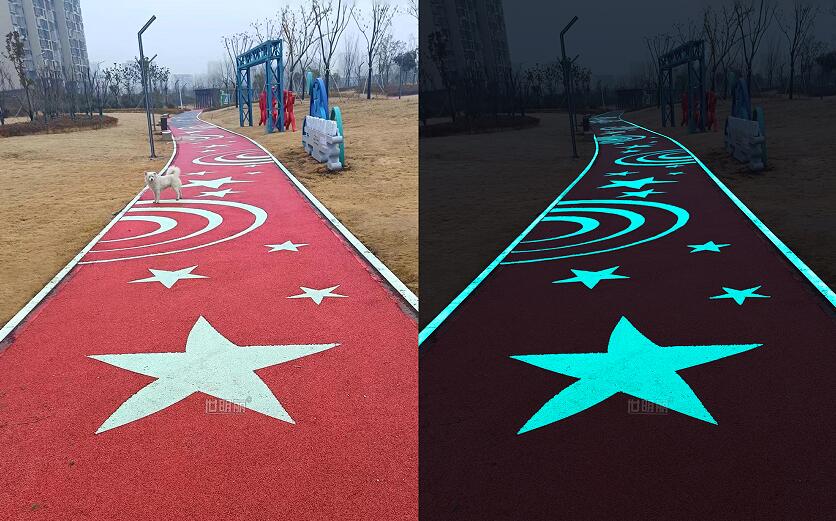
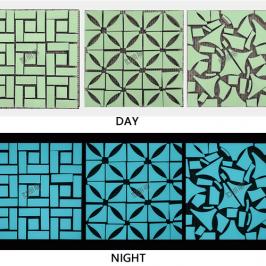
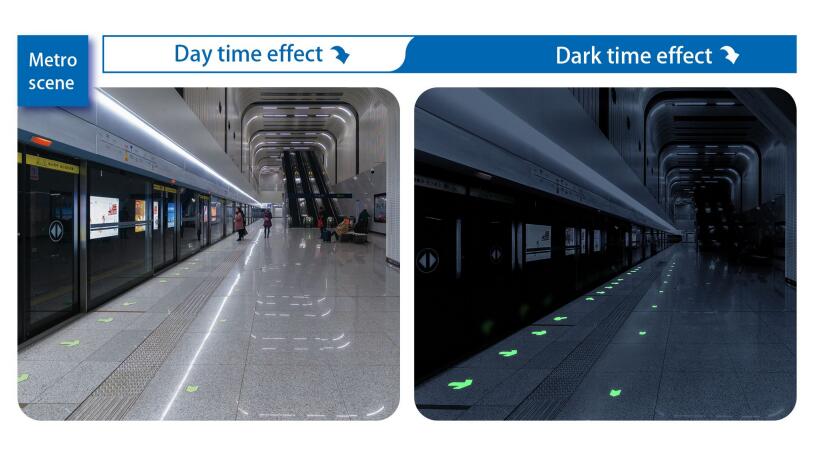
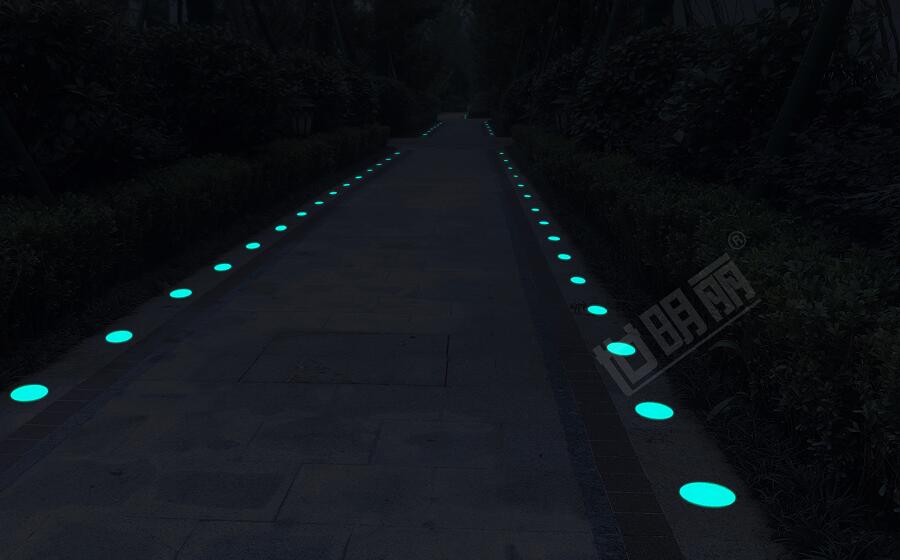
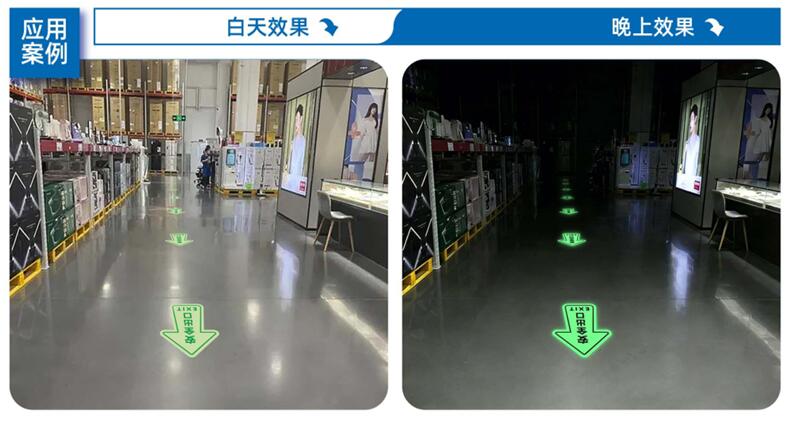
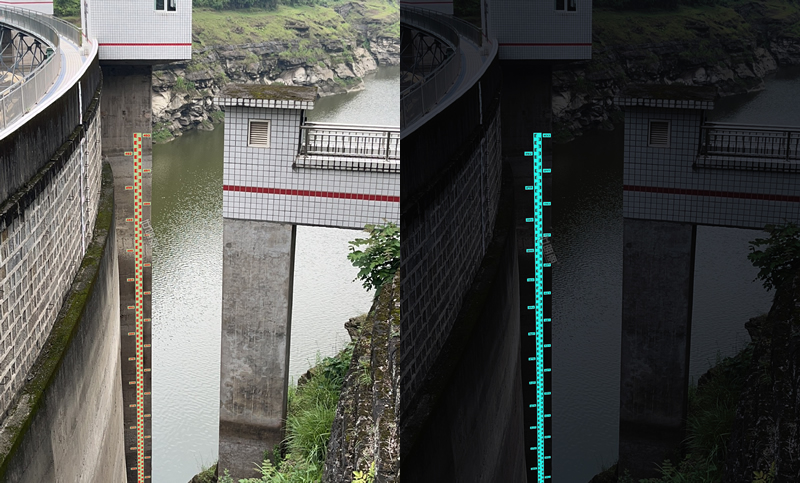
Made of rare-earth light-storing crystals and inorganic silicate substrate via integral high-temperature sintering above 1000°C, they contain no organic paint or adhesive backing throughout the process, fundamentally eliminating all fading triggers.
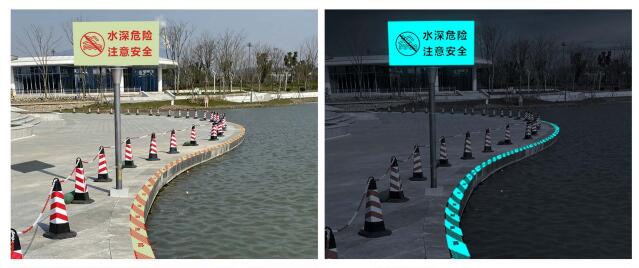
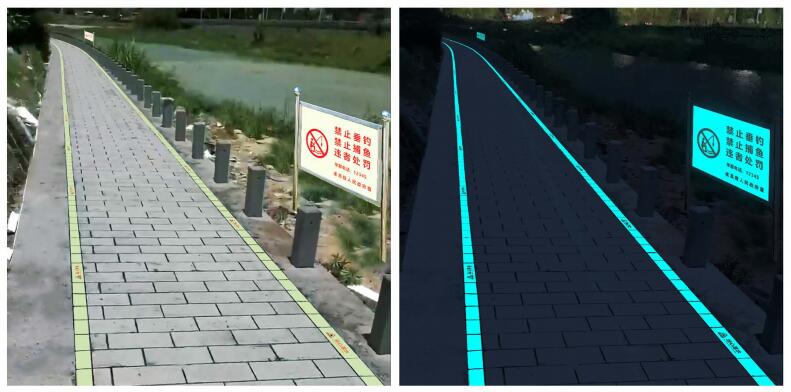
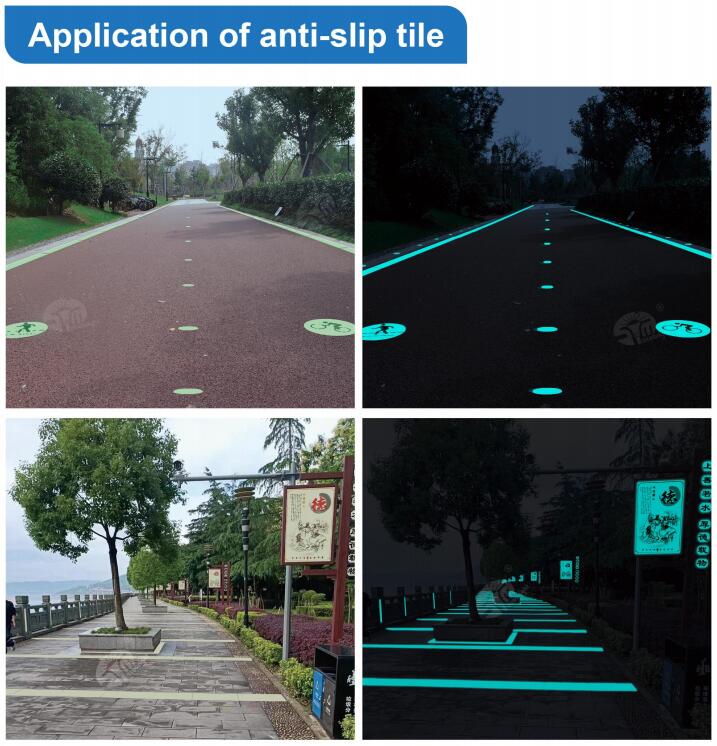
Featuring UV aging resistance, water immersion & hydrolysis resistance, scratch & wear resistance and self-cleaning surface, they never fade or delaminate for life. Meanwhile, they support passive autonomous luminescence for 10 hours at night and are compatible with AI visual recognition at unattended stations, making them the optimal choice for long-term anti-fading in water conservancy projects at present.
Reserve drainage holes at the bottom of the gauge body to avoid interlayer water accumulation that causes marking hydrolysis. Reinforce protection on water level fluctuation zones to reduce concentrated scouring and abrasion of markings by sediment.
Daily maintenance can only delay fading but cannot completely eliminate it. For a once-and-for-all solution in engineering, all water level gauges with adhesive or sprayed organic markings shall be phased out. Key inspection points, unattended stations and coastal working conditions shall be uniformly replaced with inorganic self-luminous water level gauges to completely eradicate marking fading in terms of process and material.
In summary, organic markings will inevitably fade under the influence of ultraviolet rays and water immersion. Only all-inorganic sintering technology can achieve long-term readability.
For key flood control sections, unpowered mountain reservoirs, coastal tidal reaches and unattended monitoring stations, Globright inorganic self-luminous water level gauges are the preferred choice. They not only realize lifelong fade-free markings and 10 hours of autonomous luminescence in dark environments, but also meet the demands of nighttime visibility and AI remote identification, greatly reducing long-term operation and maintenance costs.