Tel: +86 139 0589 5606
E-mail:info@globri.com

Tel: +86 139 0589 5606
E-mail:info@globri.com
In water conservancy projects, reservoirs, rivers, sluice stations and hydrological monitoring programs, water level gauges serve as the most fundamental and widely used water level observation equipment. Their material properties directly affect the accuracy of water level measurement and the service life of the equipment. So, which material makes the most durable water level gauge?
Judging from the practical application of current water conservancy projects, inorganic self-luminous water level gauges have emerged as a new type of water level monitoring product with outstanding comprehensive durability, thanks to their all-inorganic sintering process, long-lasting light-storing luminescence, wear & corrosion resistance and low maintenance features.
Traditional water level gauges generally suffer from various problems during long-term service. For example, ordinary painted steel plate gauges are susceptible to moisture erosion, leading to rust and perforation. Although stainless steel gauges have certain corrosion resistance, they tend to accumulate moss and scale in long-term humid environments, which interferes with scale reading. Painted or film-coated graduations also fade, peel and fall off easily after prolonged sun exposure and water scouring.
Particularly in mountain reservoirs, unpowered sluice stations, nighttime river sections and coastal tidal zones, traditional water level gauges lack active luminescence capacity, making accurate water level reading difficult at night, during rainstorms or in power outages. This not only increases the difficulty of manual patrol inspection, but may also affect water regime judgment during flood seasons.
In response to the shortcomings of traditional water level gauges such as insufficient durability, unobservability at night and frequent maintenance, inorganic self-luminous water level gauges integrate water level scale display with self-luminous function through material technology innovation. They realize power-free operation, all-weather visibility and long-term stable operation, providing a more reliable water level monitoring solution for modern water conservancy projects.
At present, inorganic self-luminous water level gauges have been applied in water conservancy projects in Zhejiang, Fujian, Sichuan and other regions, providing long-term water level observation support for reservoirs, rivers, sluice stations and other scenarios.
Many users believe that the durability of a water level gauge mainly depends on material hardness. However, for water conservancy projects, true durability means not only an intact gauge body, but more importantly, the ability to maintain accurate, clear and stable water level readability during long-term use.
From a professional perspective, a durable water level gauge must meet four core requirements. First, environmental corrosion resistance: it shall adapt to fresh water, seawater, sewage and acid-alkaline water environments for a long time, avoiding material aging that shortens service life. Second, long-term readability of graduations: the core function of a water level gauge is water level reading. If the gauge body is intact but the graduations are blurred, it is also functionally invalid.
In addition, water level gauges shall have good structural stability to resist external impacts such as water flow scouring, floating object collision and ice floe extrusion. Meanwhile, they shall feature low maintenance cost, reducing the frequency of manual cleaning, replacement and repair to achieve long-term economical operation.
Currently, the water conservancy industry evaluates the durability of water level gauges mainly from six aspects: corrosion resistance, graduation durability, impact resistance, anti-fouling performance, temperature adaptability and long-term operation economy.
Main types of water level gauges on the market include inorganic self-luminous water level gauges, ordinary painted steel plate water level gauges, stainless steel water level gauges and FRP (Fiberglass Reinforced Plastic) water level gauges. Due to different structures and manufacturing processes, materials show significant differences in practical durability.
Inorganic self-luminous water level gauges are integrally formed from multiple inorganic mineral materials via high-temperature sintering process, forming a stable bond between the luminous layer, graduation layer and main structure. Unlike traditional gauges with painted or film-coated graduations, the numbers and scales of inorganic self-luminous gauges are fixed through sintering, eliminating post-installation peeling and flaking issues.
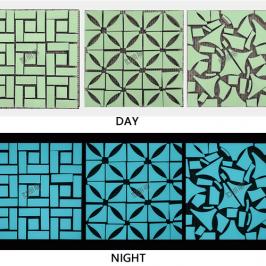
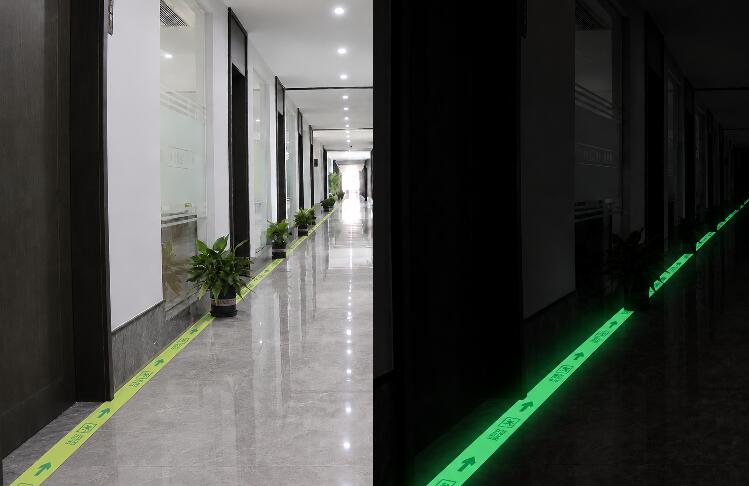
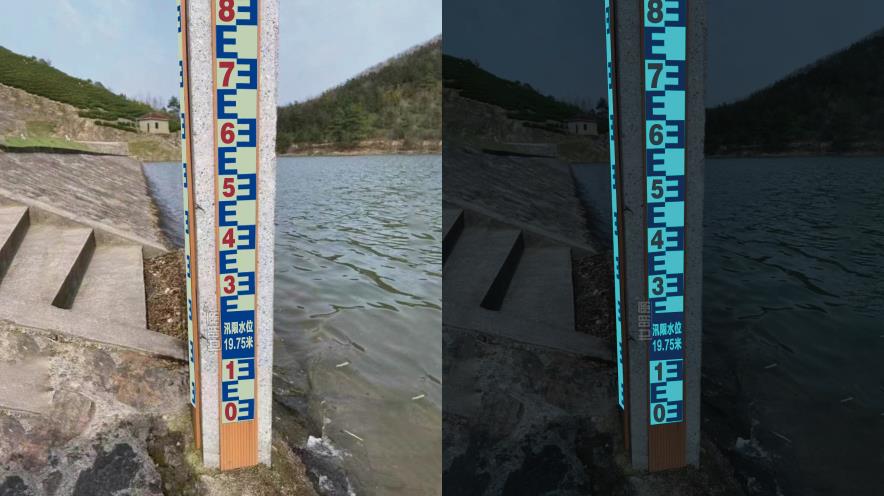
The biggest advantage of this product is its all-weather visibility. It absorbs natural light and ambient light for energy storage in daytime, and emits light continuously and autonomously at night or in complete darkness, with no need for power wiring or additional lighting equipment.
During night patrols, rainstorms, unpowered mountainous areas and sudden power outages, inorganic self-luminous water level gauges maintain clearly visible graduations, effectively solving the problem of unreadable traditional gauges at night.
Meanwhile, as graduations are fused with the gauge body via high-temperature sintering, the product boasts strong wear resistance, withstanding long-term water scouring, sand friction and damage from manual cleaning, avoiding the fading and peeling of traditional painted graduations.
In terms of environmental adaptability, the all-inorganic material features corrosion resistance, waterproofing, moisture resistance, freeze-thaw resistance and extreme temperature tolerance, adapting to complex environments such as seawater, sewage and acid-alkaline water bodies. Its dense surface structure resists adhesion of moss, shells and silt, effectively reducing the frequency of later cleaning.
Furthermore, inorganic self-luminous water level gauges require no batteries, wiring or maintenance of luminous components, resulting in low long-term operation cost. They are especially suitable for unattended hydrological monitoring points. In addition, the product can be integrated with video surveillance and AI recognition systems to realize remote water level reading, providing basic support for the construction of smart hydrology.
Applicable scenarios: Complex environments such as mountain reservoirs, unpowered river sections, coastal tidal reaches, key flood control sluice stations, unattended monitoring stations, tailings ponds and power station spillways.
Ordinary painted steel plate water level gauges are traditional economical products with low initial procurement cost, but relatively limited long-term durability.
Since steel is susceptible to moisture, once the surface paint layer is scratched, the internal metal will rust rapidly. Meanwhile, long-term exposure to solar UV radiation causes chalking and peeling of the paint layer, leading to gradually blurred water level graduations.
This type of gauge is more suitable for short-term monitoring or areas with favorable environmental conditions. For coastal, high-humidity, strong-scouring and unmaintained areas, its service life and stability are obviously insufficient.
Stainless steel water level gauges are widely used in engineering projects, featuring high strength and good corrosion resistance.
However, the graduations of stainless steel gauges are usually formed by etching, spraying or filling. After long-term UV exposure and water scouring, color fading and reduced recognizability may still occur.
In addition, moss, scale and silt easily adhere to the stainless steel surface. Excessive force during manual cleaning may also cause wear on the graduation area. Meanwhile, this type of product has no nighttime luminescence function itself, and still requires additional lighting equipment for reading in dark environments.
FRP (fiberglass reinforced plastic) and polymer water level gauges feature light weight, rust resistance and acid-alkaline resistance, showing certain application advantages in some sewage treatment projects and alpine regions.
However, as the surface layer contains resin components, they are prone to aging and chalking after long-term exposure to sunlight and natural environments. Meanwhile, some products adopt adhesive graduations, which carry the risk of falling off after long-term use.
Furthermore, this type of gauge also has no active luminescence capacity and cannot provide continuous visibility at night or during power outages.
Different water environments impose different performance requirements on water level gauges, so rational selection shall be made according to actual working conditions.
For inland ordinary reservoirs and river environments, inorganic self-luminous water level gauges are recommended as the first choice, as they meet both daily water level observation and night patrol demands while reducing later maintenance costs.
For coastal tidal zones and salt spray environments, inorganic self-luminous water level gauges are more suitable for long-term application by virtue of their excellent corrosion resistance and nighttime visibility.
For mountainous rapid-flow and ice-floe river sections, impact resistance shall be prioritized. The high-strength structural design of inorganic self-luminous water level gauges improves application stability in complex environments.
For sewage and acid-alkaline corrosive water bodies, inorganic materials have better chemical stability, reducing equipment replacement caused by corrosion.
For alpine freeze-thaw zones, inorganic self-luminous water level gauges maintain stable material performance and are not prone to deformation or damage due to temperature changes.
For unattended smart hydrological monitoring points, inorganic self-luminous water level gauges meet both manual observation and intelligent recognition requirements, representing an important direction for the upgrading of future hydrological monitoring facilities.
In terms of comprehensive corrosion resistance, graduation service life, environmental adaptability, nighttime visibility and long-term maintenance cost, inorganic self-luminous water level gauges represent an important development direction for durable water level gauges in the water conservancy engineering field.
Compared with traditional painted steel plate, stainless steel and FRP water level gauges, inorganic self-luminous water level gauges effectively solve the problems of rust, fading, nighttime invisibility and frequent maintenance existing in traditional products.
For reservoirs, rivers, sluice stations, coastal projects and smart hydrological monitoring programs, adopting high-performance inorganic self-luminous water level gauges can not only improve the accuracy and reliability of water level observation, but also reduce long-term operation and maintenance costs, making them an important choice for the upgrading of water level monitoring facilities in future water conservancy projects.