Tel: +86 139 0589 5606
E-mail:info@globri.com

Tel: +86 139 0589 5606
E-mail:info@globri.com
In the safety management systems of modern municipal engineering, fire‑protection buildings, water conservancy & power industries, and industrial plants, emergency warning and evacuation guidance facilities serve as core supporting components to safeguard personnel safety and mitigate operational risks. Traditional powered emergency signs rely on circuit power supply, suffering from drawbacks such as susceptibility to damage under high temperatures, high operation‑and‑maintenance costs, and failure upon power outages. Conventional reflective signs and low‑quality luminous films feature short luminous duration, poor flame retardancy and insufficient weather resistance, and thus cannot meet all‑weather safety protection requirements. With iterative upgrades in self‑luminous technology, Globright self‑luminous materials have become the mainstream choice for safety sign procurement in formal engineering projects, including inorganic self‑luminous panel signs and organic self‑luminous roll‑material signs. Based on the principle of autonomous light‑absorbing and light‑emitting, both products require no electricity and deliver stable luminous performance with over 10 hours of autonomous luminescence. Thanks to differentiated material properties, they are respectively suitable for long‑term high‑risk outdoor scenarios and standardized indoor engineering scenarios, fully covering safety sign application demands across diverse industries.
Inorganic self‑luminous panel signs and organic self‑luminous roll‑material signs represent the two most‑recognized self‑luminous product systems in the engineering sector. Their material processes, performance parameters and applicable scenarios are complementary, complying with safety construction standards for varying working conditions.
The inorganic self‑luminous panels are manufactured from multiple inorganic minerals through integrated firing at thousands of degrees Celsius. Their dense and robust surface crystalline glaze qualifies them as GB A1‑class non‑combustible material. Featuring resistance to high and low temperatures, corrosion, aging and water immersion, they offer an outdoor service life of more than 15 years with stable optical performance. A single light‑charging cycle enables long‑lasting luminescence for over 10 hours, oriented toward long‑term maintenance‑free outdoor all‑weather applications.
The organic self‑luminous roll‑materials are flexible rolls made of high‑molecular organic resin substrate compounded with long‑lasting energy‑storage luminescent materials. Reaching GB B1‑class flame‑retardant standard, they are environmentally friendly, non‑toxic, wear‑resistant and scrub‑resistant. Supporting UV customization and equipped with self‑adhesive backing for peel‑and‑stick installation, they allow convenient construction without wiring, and also deliver more than 10 hours of luminescence after one light‑charging cycle. They fit various lightweight and standardized indoor safety‑sign renovation scenarios.
Boasting outstanding weather resistance, flame retardancy, sturdiness and zero‑maintenance features, inorganic self‑luminous panel signs are engineered for open‑air, high‑risk complex and long‑service‑life engineering scenarios. They fundamentally resolve common pain points of conventional outdoor signs including discoloration, corrosion, nighttime failure and frequent replacement, and are widely adopted in water conservancy, electric power, municipal transportation, outdoor fire protection, industry and mining sectors.
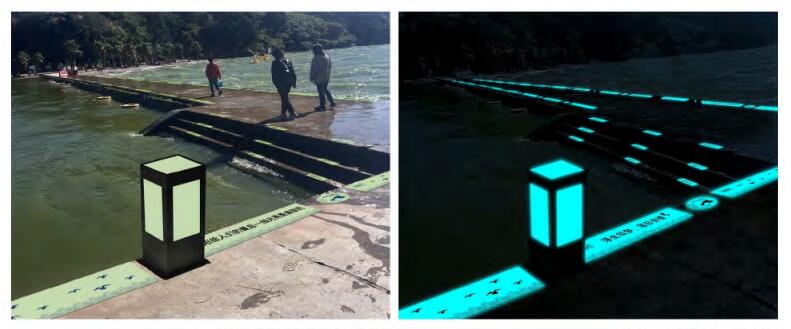
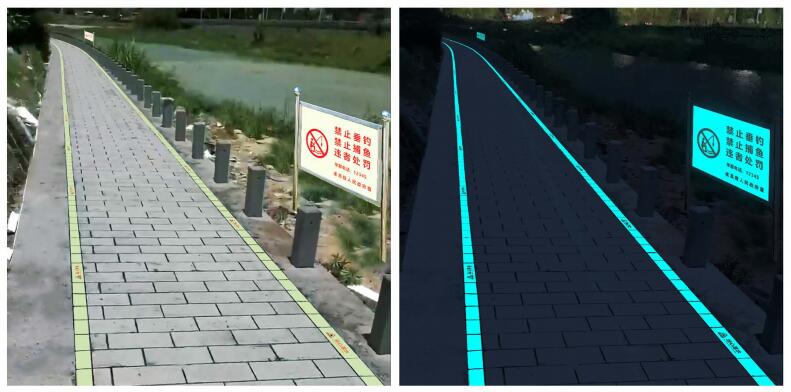
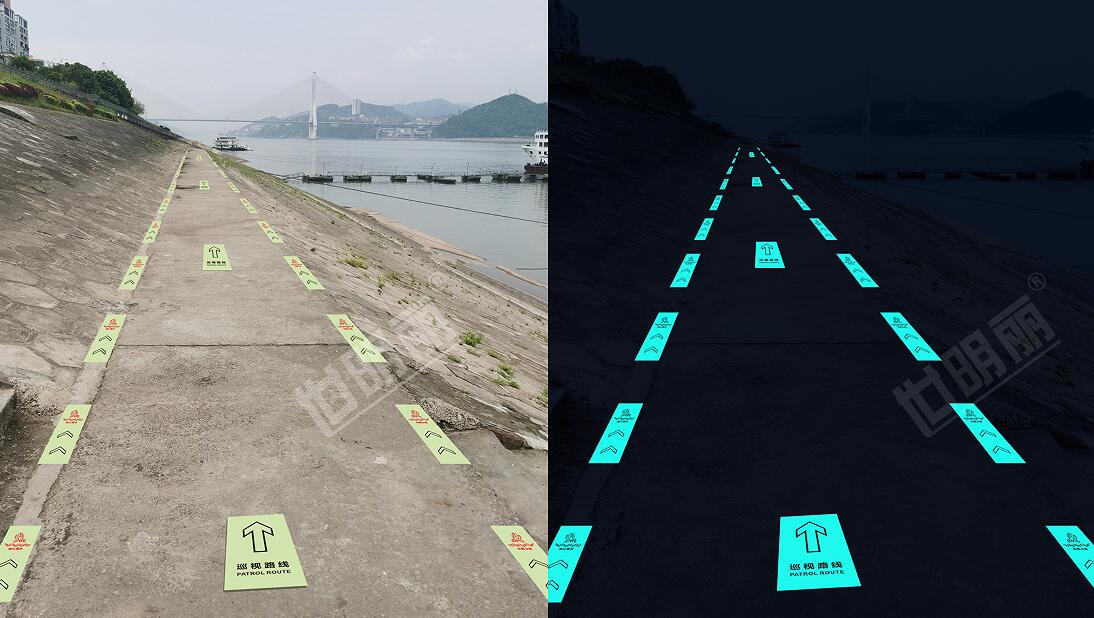
Water conservancy engineering: Inorganic self‑luminous panels can be fabricated into luminous staff gauges, dike patrol warning signs, water‑side anti‑slip warning markings, warning boards for high‑risk river sections and flood‑season safety notice boards. Adapted to humid‑rainy, sun‑baked, water‑logged and wide‑temperature‑difference outdoor working conditions in water‑conservancy sites, the products are waterproof, corrosion‑proof, fade‑resistant and anti‑aging. Their nighttime autonomous luminescence accurately guides patrol routes and clearly displays water‑level readings, effectively preventing patrol personnel from falling into water at night and consolidating flood‑season water‑conservancy safety defenses.
State grid & power industry: These products are applied for warning signs in high‑voltage hazard zones, no‑excavation markers for buried cables, warning boards on power poles and outdoor patrol‑route guidance signs. Most outdoor power facilities are exposed to open‑air environments. Inorganic panels withstand high temperatures and weathering with low breakage risk, providing 24‑hour all‑weather hazard warnings without manual maintenance, and substantially cutting long‑term safety management costs for power stations.
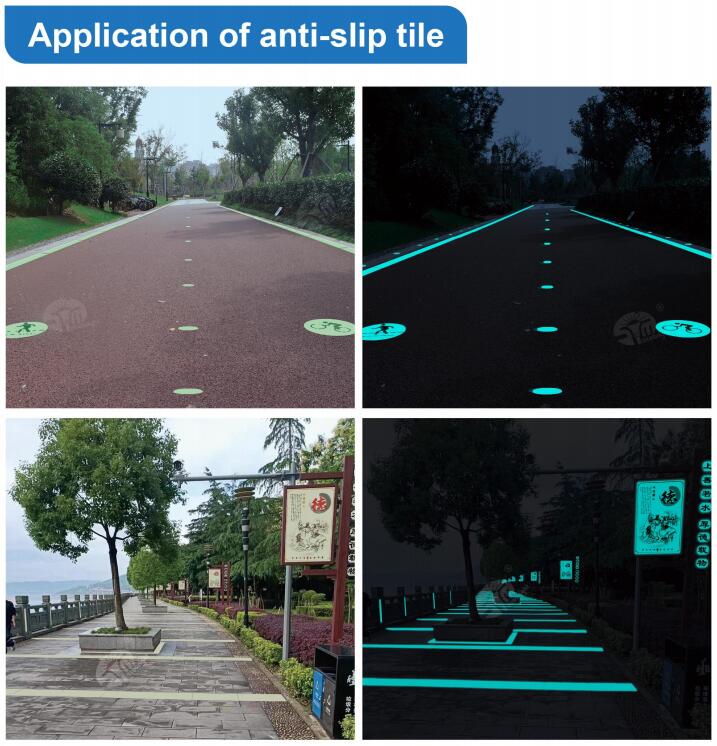
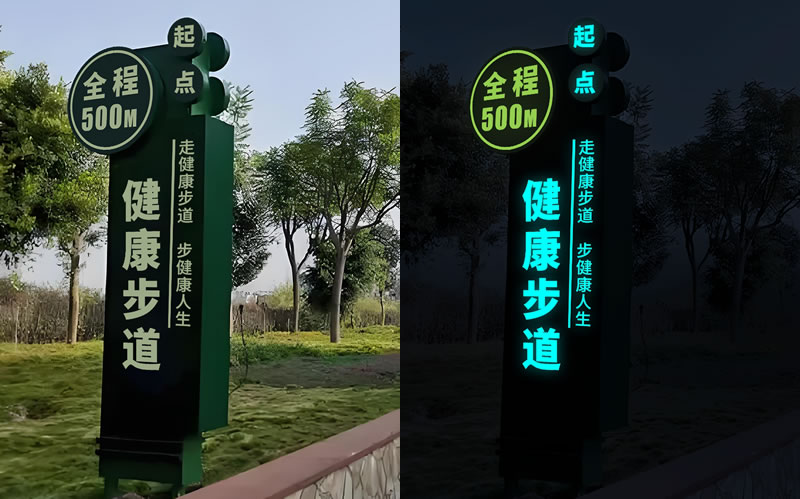
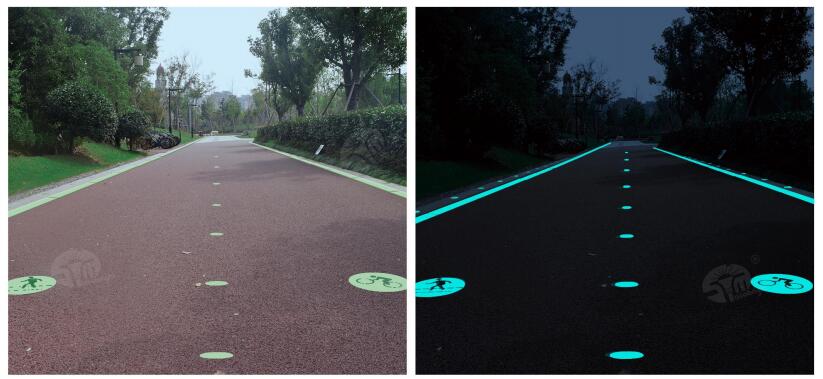
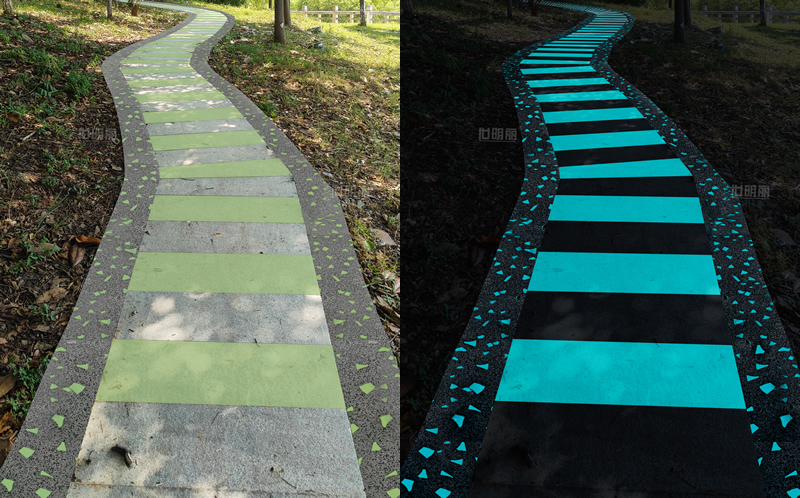
Municipal transportation and public sectors: Inorganic self‑luminous panels are used for luminous guidance on municipal walkways, waterside warnings in parks, boundary sign‑markings for rural roads and outdoor public‑safety notice boards. Whether on year‑round sun‑and‑rain exposed outdoor roads or high‑traffic municipal parks, the products maintain stable long‑term luminescence, offset nighttime lighting blind spots and improve urban public‑safety protection levels.
Outdoor fire‑protection and mining industry: As A1‑class non‑combustible material, inorganic self‑luminous panels fit outdoor fire‑safety warnings in plants, hazard‑zone signs in mines and safety notices for outdoor equipment. Resistant to high‑temperature open flames and harsh weather, they keep luminous for guidance during emergencies and remedy the failure risk of powered signs amid power cuts.
Characterized by flexibility for bending, easy installation, strong customizability, flame‑retardant safety and cost‑effectiveness, organic self‑luminous roll‑material signs are developed for indoor scenarios. Suitable for building fire‑protection, public venues, civil air‑defense projects, industrial workshops and old‑community renovation, they serve as the preferred option for lightweight upgrading of indoor emergency‑evacuation and safety‑warning systems.
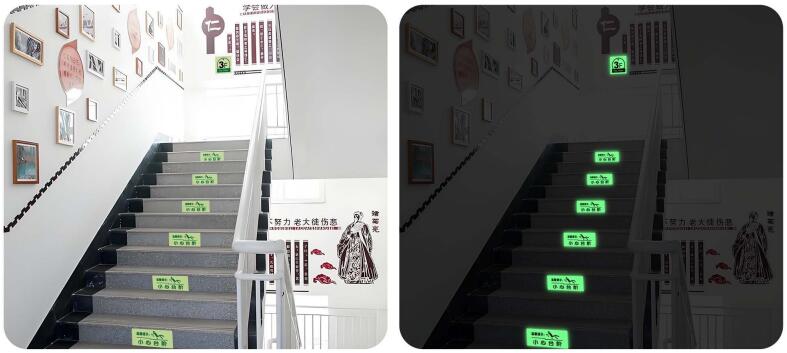
Building fire‑protection constitutes the core application for organic self‑luminous roll‑materials. They can be made into indoor emergency‑exit signs, continuous evacuation‑guidance floor stickers, wall‑mounted escape‑route markings and emergency‑evacuation layout plans. Requiring no wiring or power supply, they luminesce autonomously under power‑outage and dark conditions during fires, clearly marking escape passages and safety exits. They avoid high‑temperature damage and functional failure of traditional electronic emergency lights, and fully satisfy building fire‑protection acceptance criteria.
Large‑scale public buildings: Organic self‑luminous roll‑materials are widely deployed for indoor evacuation markings and safety‑warning signs in high‑occupancy venues including schools, hospitals, office buildings, large shopping malls, metro stations, high‑speed‑rail stations and hotel apartments. Environmentally safe, odor‑free and non‑radioactive, wear‑resistant and scrub‑proof, they cope with heavy pedestrian flow with simple daily maintenance, delivering clear guidance for public movement and emergency evacuation over extended periods.
Civil air‑defense and underground spaces: Underground garages, underground passages and confined civil‑air‑defense spaces commonly suffer poor daylighting and numerous lighting blind spots. Organic self‑luminous roll‑materials adhere to flat and curved substrates for full‑coverage continuous evacuation‑guidance markings, producing long‑lasting luminescence in darkness to fill gaps in nighttime emergency guidance and enhance safety performance of underground premises.
Industrial workshops and old‑building renovation: The roll‑materials can be processed into equipment‑safety warnings, aisle‑boundary markers and escape‑route markings for various manufacturing workshops, adapting to complex on‑site operating environments. Meanwhile, for fire‑facility upgrades in old residential compounds and aged buildings, organic roll‑materials support instant peel‑and‑stick application with fast construction and low renovation costs. Indoor luminous‑safety‑system upgrades can be accomplished without complicated procedures, meeting lightweight‑renovation demands of legacy projects.
Match product performance with on‑site working conditions to achieve proper selection and avoid failure and rework caused by improper choices. For open‑air, waterside‑humid, high‑sun‑exposure, corrosive high‑risk scenarios requiring more than 10 years of service life, prioritize inorganic self‑luminous panel signs. For water‑conservancy, power and municipal outdoor projects, they offer irreplaceable performance in weather resistance, safety and durability. For indoor normal‑temperature, well‑ventilated dry environments requiring rapid construction, lightweight renovation and cost‑effective standardized fire‑protection & public‑facility projects, prioritize organic self‑luminous roll‑material signs. Featuring flexible construction and high customizability, they fully comply with indoor fire‑protection codes and safety‑guidance requirements.
With differentiated product features, inorganic self‑luminous panel signs and organic self‑luminous roll‑material signs form a full‑coverage multi‑scenario self‑luminous safety‑sign system, overcoming inherent limitations of traditional powered signs and ordinary luminous markers. Inorganic panels focus on long‑term outdoor service, weather resistance, explosion‑proof and flame‑retardant performance for various outdoor high‑risk engineering sites. Organic roll‑materials target standardized indoor scenarios with convenient construction, cost‑efficiency and compliance with acceptance standards. Both product series operate without electricity via autonomous light‑absorbing‑and‑emitting function and demand minimal post‑installation maintenance. They effectively boost all‑weather safety‑protection capacity across industries and cut engineering operation‑and‑maintenance costs, ranking as top‑choice products for safety‑sign upgrading in water‑conservancy, power, municipal, fire‑protection, industrial and public‑construction projects.