Tel: +86 139 0589 5606
E-mail:info@globri.com

Tel: +86 139 0589 5606
E-mail:info@globri.com
In safety construction projects for fire protection, water conservancy, electric power, municipal works and civil air defense, the actual service life of self‑luminous signs is a core factor determining project cost‑effectiveness, later operation and maintenance costs, and acceptance compliance. Four common types of self‑luminous materials on the market vary greatly in service life, and their real service durations are clearly outlined below: inorganic self‑luminous panel signs deliver stable outdoor performance for more than 15 years and match the service life of buildings when used indoors. Organic self‑luminous roll‑materials last over 5 years when installed on floors and more than 8 years on vertical surfaces. Conventional organic luminous films have an overall lifespan of only 1–2 years and fail to meet fire protection requirements; they lose functionality within half a year outdoors. Organic acrylic luminous panels can serve 1–2 years indoors and do not satisfy fire‑protection standards, while they readily age and become brittle outdoors. The manufacturing process, structural characteristics and weather resistance of different materials directly determine product service cycles and safety stability. From a manufacturer’s professional perspective, Shiming Optics comprehensively analyzes the lifespan differences, aging causes and engineering selection criteria of the four types of self‑luminous signs.
Many engineering projects tend to confuse “intact appearance” with “functional validity”. The genuine service life of self‑luminous signs follows dual standards: physical lifespan and luminous functional lifespan. The physical lifespan refers to the complete service cycle during which the substrate remains free of breakage, cracking, delamination and edge warping. The luminous functional lifespan denotes the valid period when the sign’s light‑absorption duration, nighttime luminous brightness and luminous duration comply with safety guidance standards. Once luminous brightness fades or luminous duration falls below requirements, the product is deemed invalid even if its appearance remains intact, and cannot satisfy fire protection and safety inspection specifications. All lifespan data below represent actual effective service durations under normal natural aging conditions without artificial external damage.
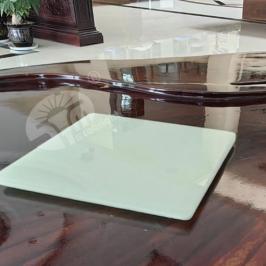
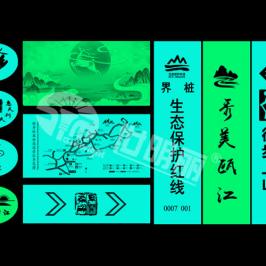
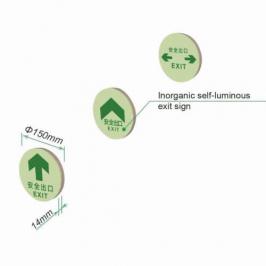
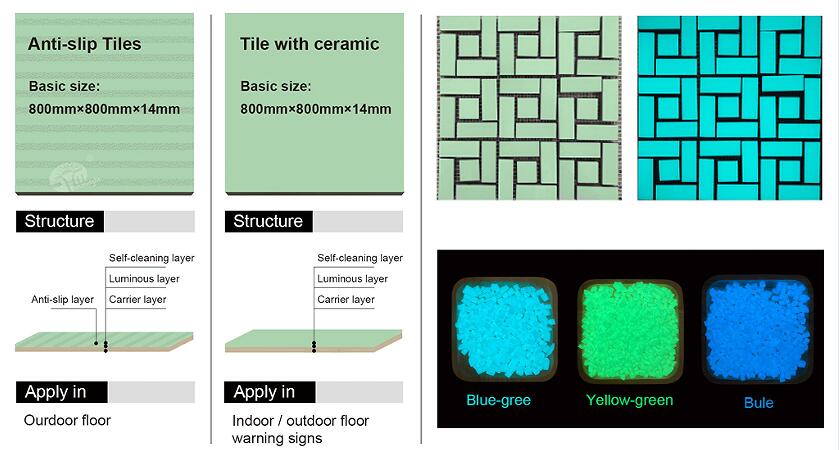
Inorganic self‑luminous panels are currently the high‑grade self‑luminous material with the longest service life and most stable luminous performance, and the only luminous material suitable for long‑term all‑weather outdoor service. Manufactured from multiple high‑purity inorganic mineral raw materials through integrated sintering at thousands of degrees Celsius, the patterns, colors and luminous layer on the panel fuse integrally with the substrate. A dense crystalline glaze coats the surface, forming an overall stone‑like structure rather than an ordinary coated composite material.
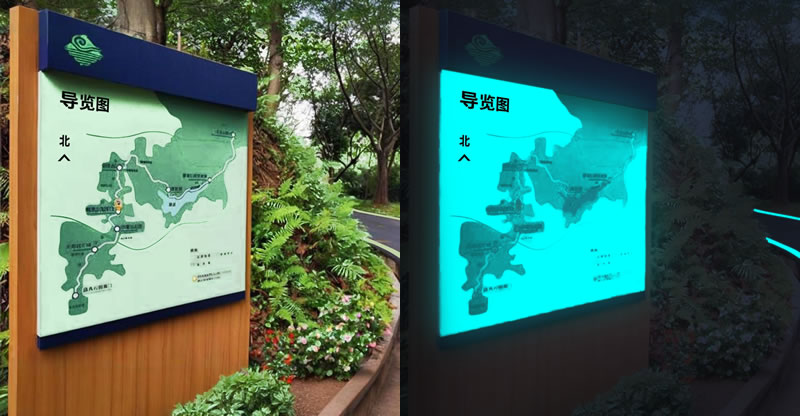
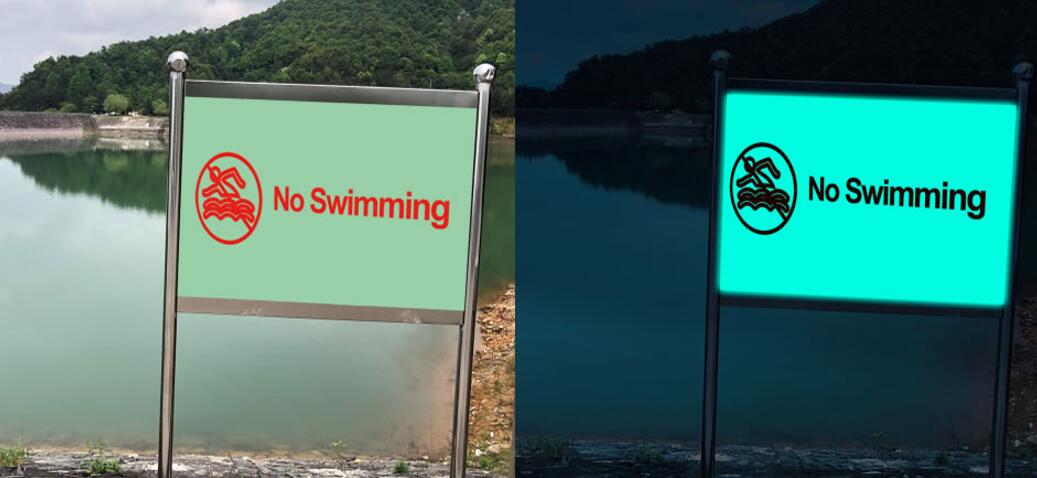
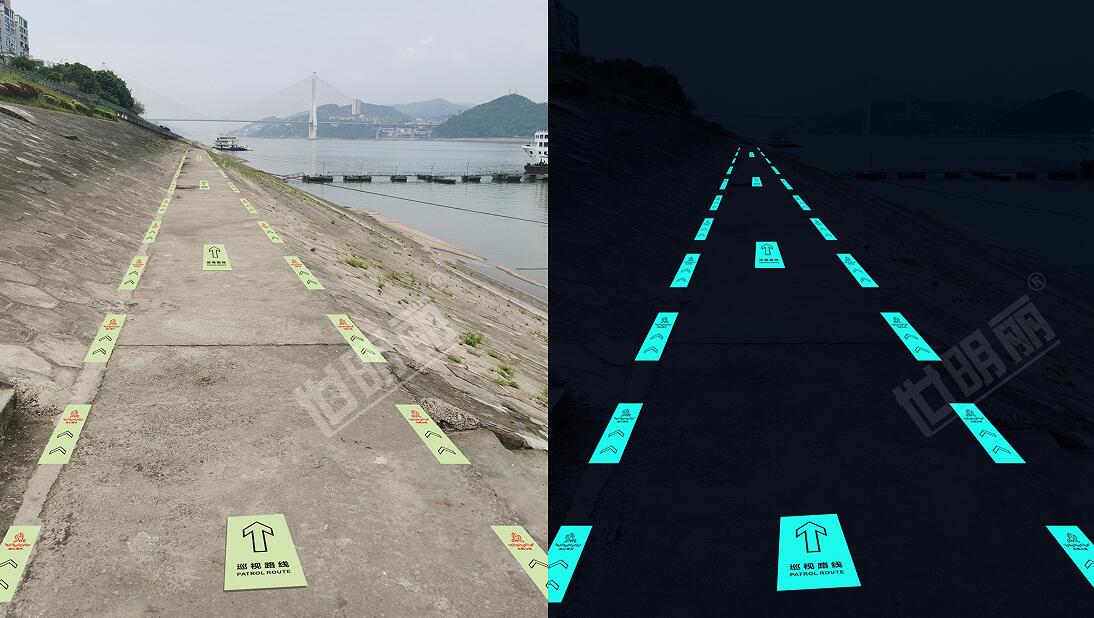
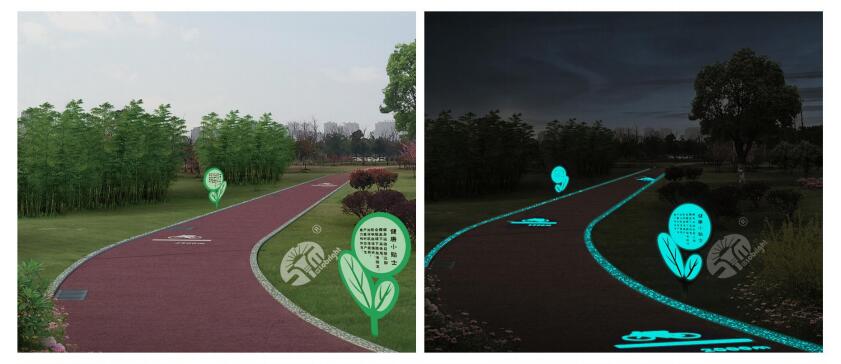
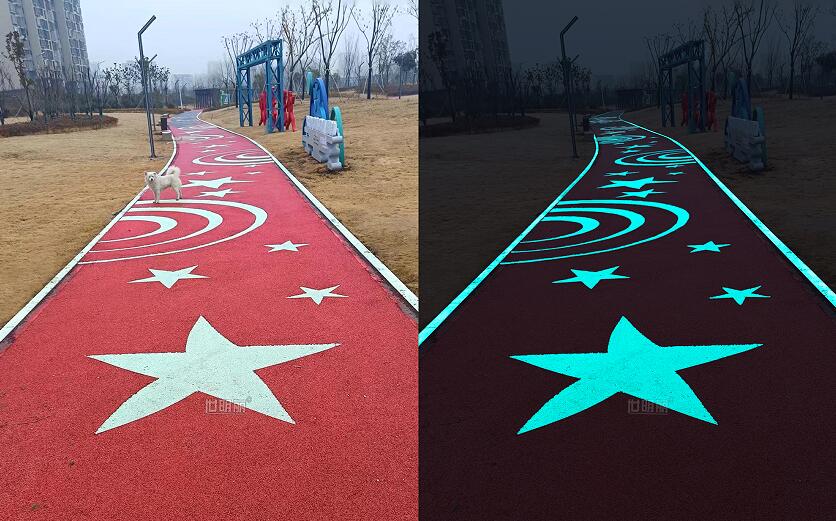
Thanks to its unique manufacturing process, the product achieves A1‑class non‑combustible performance, with outstanding properties including resistance to high and low temperatures, corrosion, aging, water immersion and ultraviolet exposure. Its graphics and patterns never fade. The light source originates from inside the panel and will not peel off, oxidize or degrade. Under typical outdoor working conditions for water conservancy, electric power, cultural tourism, landscape and municipal open‑air projects, its effective service life exceeds 15 years. When used in dry indoor environments, its service cycle matches that of the building. Throughout the whole service period, luminous brightness and the 10‑hour long‑duration luminescence remain consistently stable with almost no natural aging attenuation. Damage only occurs under external forces such as violent impact or artificial vandalism. It requires zero maintenance and no replacement throughout service, making it the preferred material for long‑term engineering projects.
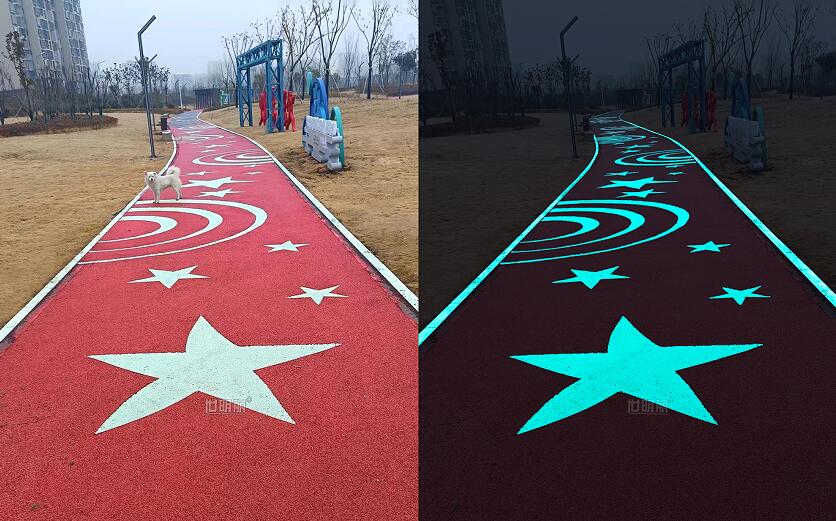
Organic self‑luminous roll‑materials are flexible luminous products refined by compounding long‑lasting energy‑storage luminous powder with a high‑molecular organic resin substrate. The surface can be equipped with a dedicated wear‑resistant protective layer. With self‑adhesive backing, they support UV customization for peel‑and‑stick installation with no wiring required, adapting to construction on various complex indoor base surfaces. Reaching GB B1‑class flame‑retardant standards, the material self‑extinguishes upon flame removal, is environmentally friendly and non‑toxic, and withstands wiping with cleaning agents. It delivers stable luminescence for more than 10 hours after a single light‑absorption cycle, fully meeting indoor emergency evacuation guidance requirements for fire protection.
Restricted by material characteristics, organic roll‑materials are not suitable for long‑term outdoor exposure to sunlight and rain, as ultraviolet rays accelerate yellowing and aging of the resin layer. Nevertheless, they maintain stable lifespan performance in qualified indoor scenarios, with clear service life benchmarks classified by installation location: over 5 years for floor applications with frequent foot traffic, resisting daily pedestrian abrasion and cleaning friction; more than 8 years for friction‑free installation on walls and columns. Luminous performance stays stable and delamination or edge warping rarely occurs during service. It is the mainstream preferred material for indoor fire‑protection renovation in hospitals, schools, metro stations, shopping malls, factories and civil air defense projects.
Conventional organic luminous films, also known as light‑storage films, use ultra‑thin PET or PP films as substrates, with luminous powder applied via coating processes. They have no wear‑resistant protective layer or reinforcing structure, featuring thin and fragile substrates. Such products have low production thresholds and low prices, yet suffer prominent overall performance drawbacks and extremely short service life, making them entirely unsuitable for formal long‑term safety engineering.
Under normal dry indoor conditions, the effective service life of ordinary luminous films is merely 1–2 years. Problems such as adhesive failure, edge warping, surface scratches and luminous layer peeling easily arise during use. If deployed outdoors, exposure to sunlight, rain and sand erosion causes fading, chalking and delamination within only 3–6 months, completely eliminating luminous functionality. In addition, conventional luminous films only emit light for roughly 1 hour, with dim brightness in later stages insufficient for emergency guidance. They are combustible materials that produce molten drips when burning, creating secondary fire hazards. They are only fit for simple temporary signs and strictly prohibited for standardized engineering projects such as fire protection, water conservancy and electric power.
Organic acrylic luminous panels are rigid boards made by mixing inorganic light‑storage powder with PMMA acrylic base material, followed by high‑temperature extrusion and calendering shaping. Featuring good light transmittance and flat surfaces, they are commonly used for simple decorative signs. However, the material has inherent weaknesses, poor weather resistance and weak anti‑aging capacity, resulting in a service life far shorter than professional engineering‑grade self‑luminous materials.
In well‑controlled indoor environments with shading, dryness and low ventilation, acrylic luminous panels last about 8–10 years. In ordinary indoor spaces with regular lighting and frequent ventilation, the boards gradually turn yellow and brittle, and the light‑storage powder precipitates and attenuates over time, limiting effective service life to only 4–6 years. For outdoor applications, ultraviolet radiation accelerates panel aging, leading to yellowing, cracking and loss of luminescence within 1–2 years and total failure. Meanwhile, this material is combustible, continues burning under open flame and produces molten drips, resulting in inadequate fire safety. It is only suitable for general indoor decoration and cannot be used for emergency evacuation or safety warning in high‑risk zones.
For outdoor water conservancy dams, electric power field sites, municipal roads and open‑air high‑risk scenarios, inorganic self‑luminous panels must be selected to achieve long‑term maintenance‑free service. For indoor fire emergency, public building and old renovation projects, compliant B1‑class organic self‑luminous roll‑materials are preferred to balance cost‑effectiveness and stability. Ordinary luminous films and acrylic luminous panels are not recommended for formal safety engineering due to short lifespans and substantial fire risks. Proper material matching not only meets fire‑protection acceptance codes but also greatly reduces later replacement and maintenance costs to realize long‑term safety protection.